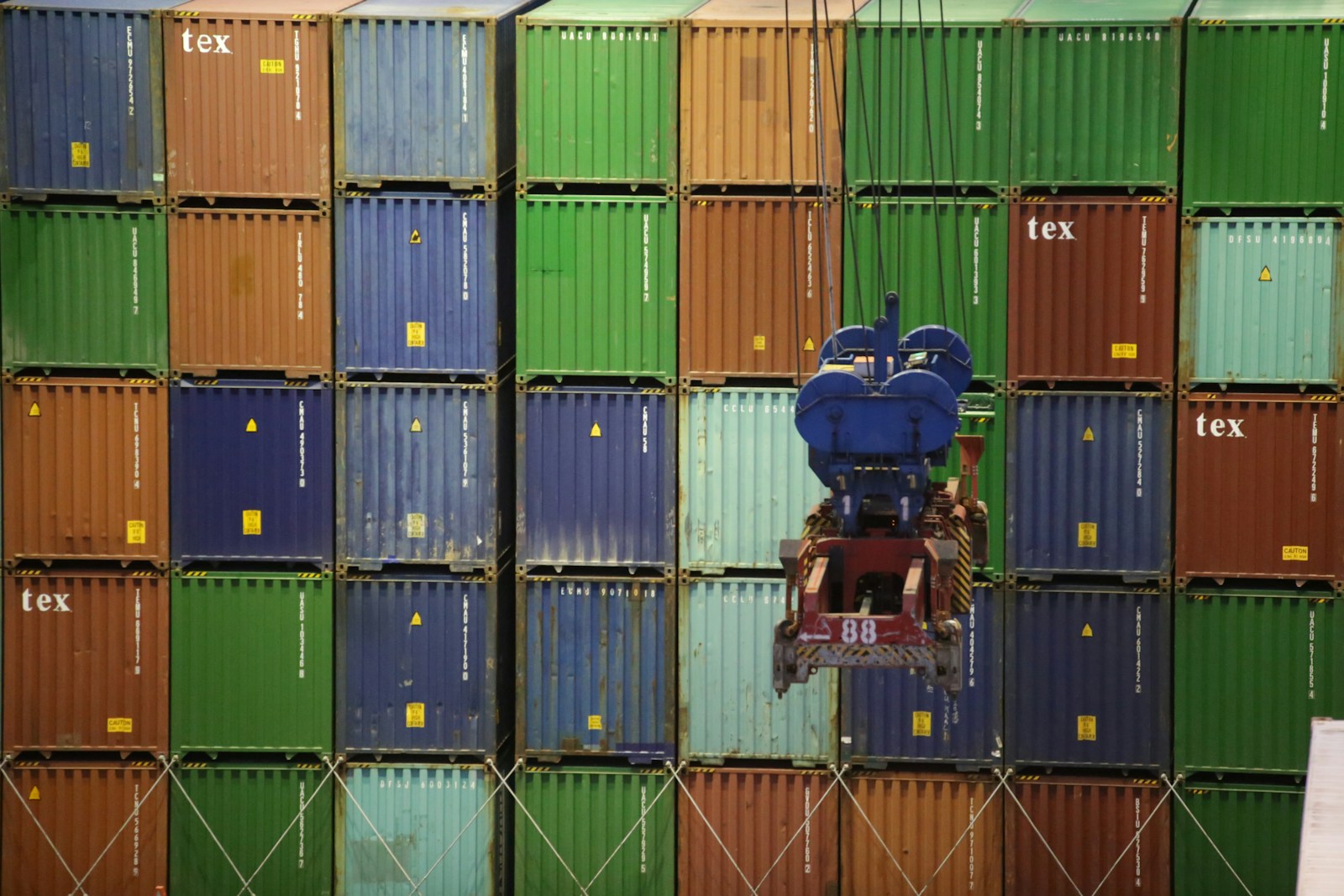
In today’s world, where technology is rapidly developing, the way businesses manage their infrastructures is also changing significantly. Innovative solutions such as cloud technologies, virtualization and container technologies allow businesses to operate flexibly, efficiently and cost-effectively. While the digital transformation of businesses is accelerating, Docker container technology, which has an important place in this transformation, has become a remarkable tool in recent years. Docker is a platform that revolutionizes the way applications are developed, deployed and run.
In this article, we will examine in detail what Docker container technology is, how it works, its advantages and usage scenarios, and explain how businesses benefit from this technology. We will also examine the reasons behind Docker’s popularity and the features that make it so valuable. We will also give you information about CloudSpark‘s Docker solutions and tell you what kind of support you can get in the digital transformation of your business.
What is Docker?
Docker is an open-source containerization platform, and when it was released in 2013, it was designed to allow developers and system administrators to develop and deploy applications more quickly and reliably. Docker packages applications in containers, making it possible to run them harmoniously in different environments. Each container contains all the dependencies required for the application to run, thus increasing the portability of applications.
Especially in a period when virtual machines (VMs) have become widespread, Docker containers attracted attention by offering a lighter and more flexible alternative. While virtual machines require a separate operating system, containers use fewer resources by sharing the host operating system. This allows organizations to run more applications on the same physical hardware, thereby reducing costs.
Key Features and Benefits
- Microservice Architecture: Docker allows you to break your application into smaller, independent microservices; This means that each service is developed, tested and deployed independently if an issue occurs. For example, on an e-commerce platform, you can treat functions such as payment processing, product listings, and user management as separate microservices. Thus, an error occurring in one service does not affect other services.
- Compatibility and Portability: Docker containers work the same across different platforms and environments, from local servers to cloud environments. Your app runs smoothly wherever you are; This feature allows developers to deploy their applications faster and more reliably. For example, a developer can easily move an application running on his local machine to the cloud.
- Efficient Resource Usage: Unlike virtual machines, Docker uses resources more efficiently; containers share the cores of the host operating system, allowing more applications to run on the same hardware. Additionally, thanks to the tiered file system, disk space is used more efficiently, which reduces hardware costs for businesses.
- Continuous Integration and Continuous Deployment (CI/CD): Docker makes it easy to implement CI/CD throughout the software development process. Developers can distribute their code more frequently and securely. This allows software development processes to be accelerated and work quality increased. For example, each new code version can be automatically tested and run in a Docker container, reducing the error rate.
- Standardization of Development Environment: Docker ensures that all developers work in the same environment. Thanks to Docker, which accelerates the development process and increases efficiency, incompatibility problems that developers face when working on different operating systems are eliminated. Developers say, “This works on my machine” They don’t have to ask the question.
- High Scalability: Docker containers can scale quickly as needed. When the traffic of your application increases, new containers can be created and load balance can be achieved on existing containers. For example, a social media platform can maintain service quality by instantly adding new containers if the number of users increases.
Usage Scenarios
Docker has many different uses in different industries. For example, an e-commerce platform can create microservices architecture using Docker to improve user experience. Because each service can be updated and improved independently, new features can be added without affecting the entire system. Moreover, as user demands change, simply scaling the relevant microservices is sufficient.
Another example is the benefits Docker provides to software development companies. In the development environment, developers can build and test their applications. Docker eliminates incompatibility problems that may arise during the development process by providing the same environment at every stage of the application. This shortens development time and reduces errors. For example, during a development process, the application may run on one developer’s machine but not on another; However, with Docker these issues are minimized.
What is the situation in terms of security?
In addition, big data processing projects can also benefit from Docker. Data analysis and machine learning projects require rapid processing of large amounts of data. These processes can be performed quickly and efficiently with Docker containers. Each container operates independently, distributing the processing load and improving the overall performance of the system. For example, by running a machine learning model in Docker, it can be tested with different datasets and the results can be quickly compared.
How Does It Work?
Docker uses virtualization technology by running applications in containers. Containers can be thought of as lightweight cloud servers that run on top of the operating system. Each container contains the application code, dependencies, and all necessary components. This way, developers can run their applications in a standalone environment. This structure of Docker simplifies application development and deployment processes.
Docker runs on a component called Docker Engine. Docker Engine is a core service that enables the creation, management and running of containers. Container images are created with Dockerfile configuration files. These images contain various versions and configurations of the application. Users can create these images and run them in the environments they need. For example, when a developer wants to add a new feature, he can create a new container image containing only that feature and test it on the existing system.
As CloudSpark, we offer free consultancy on this issue, if anyone is curious, please contact us.
Who Should Use It?
Docker offers great benefits to many professionals in various industries. Software developers, system administrators, DevOps engineers, and data scientists can benefit from the flexibility and efficiency that Docker provides. Especially teams that want to speed up their software development processes can shorten their application development time with Docker and bring high-quality software to the market more quickly. For example, a software development team can deploy each new update within minutes thanks to Docker.
In addition, businesses working on large-scale projects at the enterprise level can use their resources more efficiently, reduce their costs and increase their operational capabilities, thanks to Docker. The advantages Docker offers are particularly valuable for companies that want continuous integration and continuous deployment processes. For example, a financial institution can use Docker to improve customer experience by making hundreds of updates every day.
Are you wondering how it works?
Docker Solutions with CloudSpark
CloudSpark is a partner ready to guide you through the digital transformation of your business. We optimize your application development and deployment processes by offering solutions specific to your business needs with Docker and other container solutions. Our expert team can speed up your processes by using Docker effectively and creating the most suitable strategies for you. For example, CloudSpark supports you at every stage of the application development process with Docker.
But do you really need it?
As CloudSpark, we facilitate your cloud-based application development processes with Docker solutions specific to your business needs and help you achieve your business goals by offering a flexible structure. For more information, please visit our website and contact our experts. We are here to accelerate the digital transformation of your business with our solutions tailored to your needs.
As CloudSpark, we offer free consultancy on this issue, if anyone is curious, please contact us.
Last Word
Docker container technology makes it easy to deliver flexibility, efficiency and compatibility in the modern enterprise environment. Thanks to Docker, businesses can accelerate their digital transformation processes, use their resources more efficiently and reduce their costs. If you’re wondering whether your business is ready for this transformation, we at CloudSpark can guide you. Contact us to learn more about Docker and our other container solutions and explore the potential of your business.
Pipeline Architecture and Best Practices
A well-designed CI/CD pipeline can reduce the process from code commit to production to 15 minutes. But just being fast isn’t enough — it must also be reliable. Flaky tests are the biggest enemy sabotaging production.
We set up the pipeline stages as follows: Lint → Unit Test → Build → Integration Test → Security Scan → Staging Deploy → Smoke Test → Production Deploy. The fail-fast principle is applied at every stage. If the error is caught early, the cost will be low.
With the GitOps approach, all infrastructure and application configuration is kept in Git. If you want to make changes, you open a Pull Request. Review and approval processes minimize human error.
Monitoring and Observability
You’ve deployed, everything is green — but is it really? Without observability he is blind. Metrics, Logs and Traces — this holy trio keeps the pulse of your system.
The Prometheus + Grafana combination visualizes infrastructure and application metrics. It complements log aggregation with Loki and distributed tracing with Jaeger. If a request takes more than 200ms, you can see exactly which service is creating the bottleneck.
Alerting is also critical. Instead of setting alarms for every metric, we define SLO (Service Level Objectives). “99.9% uptime” When you set a target, the alarm will only come for situations that pose a threat to this target. This prevents alarm fatigue.
Frequently Asked Questions
Where should I start with DevOps?
Version control (Git) and CI/CD pipeline are the most basic building blocks. Do not switch to containers or Kubernetes without establishing these. First goal: Automatic testing of each commit and deployment to the staging environment. This alone would be a revolutionary change for many teams.
Is Kubernetes necessary?
No. If you have 3-5 services, Docker Compose may be sufficient. Kubernetes makes sense if you manage 10+ microservices and need autonomous scaling. The operational burden of Kubernetes should not be underestimated — for small teams, managed Kubernetes (AKS, EKS) makes much more sense.
Should we use Infrastructure as Code?
Definitely. Managing infrastructure as code with Terraform or Bicep ensures repeatability and consistency. Manual configuration invites configuration drift and human error. IaC also offers version control and PR-based change management with Git.
Make a Difference with CloudSpark
CloudSpark, as Turkey’s leading cloud technologies and digital transformation partner, serves with its expert staff in the field of Docker Container Technology. We offer 24/7 technical support, proactive monitoring and customer-specific solution architecture.
Contact us for a free consultation. Let’s analyze your existing infrastructure and design together the solution that best suits your needs.